
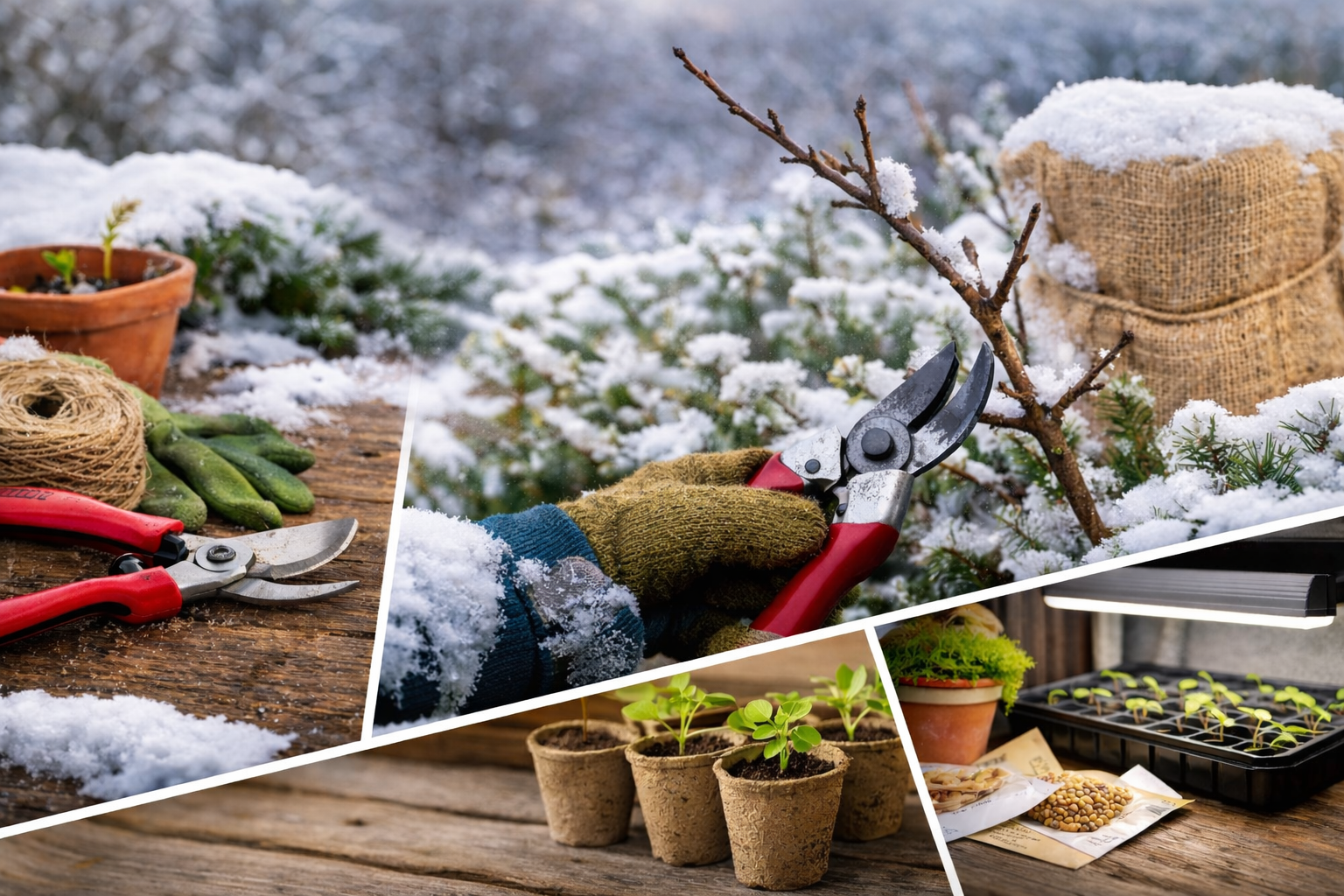
January gardening chores may look quiet on the surface, but this is one of the most important months to prepare, protect, prune, and plan your garden for the season ahead. While most plants are resting, this is the perfect time to prepare, protect, prune, and plan — and in warmer areas, even keep growing.
This January gardening chores guide covers what to do across the USA, with tips for cold, mild, and warm climates, plus simple ways to support your garden naturally.
January Gardening Tasks for Cold Climates (USDA Zones 3–7)
In colder regions, January is all about protection and preparation, not active growth.
Protect plants from winter damage
- Check mulch around trees, shrubs, and perennials and top it up if needed
- Water evergreens during dry, mild spells when the ground isn’t frozen
- Gently remove heavy snow from branches to prevent breakage
Prune carefully
January is a good time to:
- Remove dead, damaged, or diseased branches
- Plan dormant pruning for fruit trees and vines later in winter or early spring
Avoid pruning spring-flowering shrubs now — you may remove this year’s blooms.
Start seeds indoors (selectively)
Some gardeners begin seed starting in January, especially for slow-growing plants. If you’re starting seeds:
- Clean and sanitise trays and pots
- Set up grow lights before seedlings emerge
- Use a light, well-draining seed-starting mix
💡 Tip: Once seedlings are actively growing, a gentle, microbe-rich feed like Ecoworm Soil Extract can help support healthy root development when used at the recommended dilution.
January Gardening Tasks for Mild Climates (USDA Zones 7–8)
In milder regions, January is a productive transition month.
Weed now to save time later
Many winter weeds are still growing:
- Pull weeds after rain when soil is soft
- Mulch beds to suppress new growth
- Edge garden beds to keep lawns in check
Prep soil for spring
January is an excellent time to:
- Test your soil
- Plan soil improvements
- Prepare empty beds when conditions allow
Healthy soil is the foundation of a successful garden. Supporting soil biology early helps everything planted later.
🌱 Ecoworm tip: If your soil isn’t frozen and plants are active, Ecoworm Soil Extract can be used to support beneficial microbes and overall soil health.
Prune fruit trees and vines
Many fruit trees and grapevines are pruned during winter dormancy. Focus on structure, airflow, and removing weak growth.
January Gardening Tasks for Warm Climates (USDA Zones 9–11)
In warm regions, the garden often stays active through January.
Continue planting and harvesting
Depending on your location, January may include:
- Succession planting
- Harvesting leafy greens and vegetables
- Replanting fast-growing crops
Tidy and maintain beds
- Remove spent plants and diseased foliage
- Improve airflow to reduce pest and disease pressure
- Refresh mulch as needed
🌿 Ecoworm tip: Weather swings can stress plants even in warm climates. Ecoworm Sapropel Extract is ideal for supporting plant recovery and resilience during these transitions.
Indoor & Greenhouse Gardening in January
January is prime time for houseplant care and greenhouse prep.
Check plants for pests
Indoor conditions can encourage pests like aphids and spider mites:
- Inspect leaf undersides regularly
- Isolate affected plants early
🧼 Natural solution: Ecoworm Potassium Soap can be used as part of a gentle routine to help wash away soft-bodied pests on indoor plants. Always patch-test first and follow label directions.
Go easy on feeding
Most houseplants grow more slowly in winter due to lower light levels. Only feed plants that are actively growing, especially if you’re using grow lights.
Clean Tools & Prep Equipment
January is the best month to get organised.
- Clean and sharpen pruners and shears
- Wash pots and seed trays
- Organise stakes, ties, and labels
🧽 Ecoworm tip: Ecoworm Potassium Soap works well for cleaning garden tools, pots, greenhouse surfaces, and work areas — without harsh chemicals.
Plan Your Garden Before Spring Arrives
This might be the most important January gardening chore.
- Review last year’s successes and failures
- Plan crop rotation
- Order seeds early to avoid shortages
- Decide what you’ll grow less of this year
A clear plan now saves time, money, and frustration later.
January Garden Checklist (Quick Reference)
✔ Protect plants from frost, wind, and snow
✔ Remove dead or damaged branches
✔ Start seeds indoors where appropriate
✔ Weed and mulch in mild and warm climates
✔ Clean and sharpen garden tools
✔ Check houseplants for pests
✔ Prepare soil and plan for spring
Set Your Garden Up for Success
January may not look exciting in the garden, but it’s one of the most important months of the year. Thoughtful winter care, smart planning, and healthy soil now lead to stronger plants, better harvests, and fewer problems later.
By focusing on preparation instead of rushing, your garden will thank you when spring arrives.
This January gardening chores guide covers what to do across the USA, with tips for cold, mild, and warm climates, plus simple ways to support your garden naturally.
Comments are closed