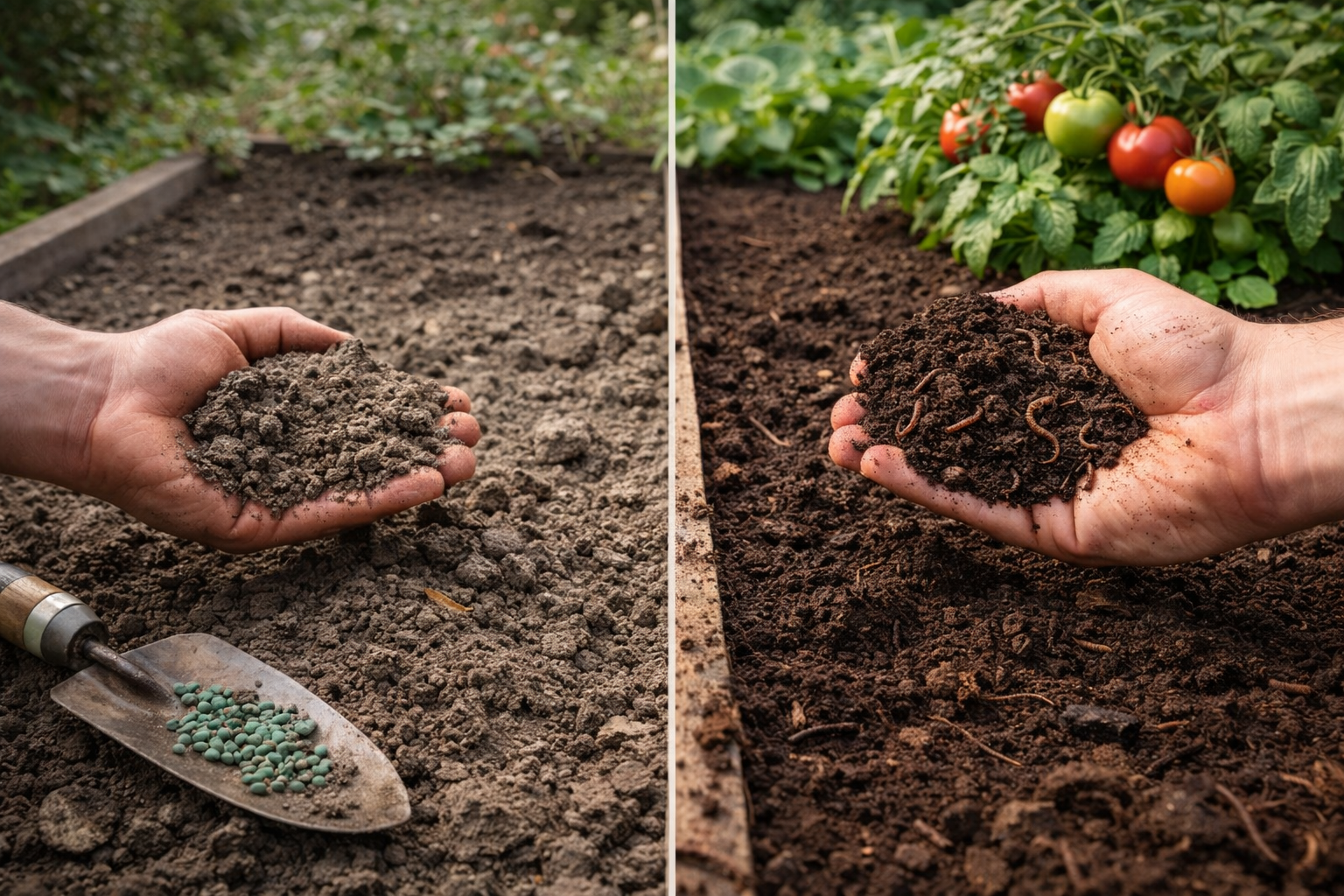
Can you turn bad soil into good soil? Yes, you can. Even compacted, tired, or nutrient-poor soil can be restored when you focus on rebuilding structure and biological life rather than relying only on synthetic fertilizers.
Many gardeners believe poor soil must be replaced. In reality, most soil problems can be corrected naturally with the right approach.
Why Soil Becomes Degraded
Before asking can you turn bad soil into good soil, it helps to understand what causes the decline in the first place.
Common causes include:
• Repeated chemical fertilizer use
• Lack of organic matter
• Soil compaction
• Over-tilling
• Poor drainage
According to the USDA Natural Resources Conservation Service, healthy soil depends on active biology and stable structure. When microbial life declines, nutrient cycling slows and plants struggle to grow properly.
https://www.nrcs.usda.gov/conservation-basics/soil-health
Can you turn bad soil into good soil? Learn practical organic methods to restore poor soil and improve garden health naturally.
Can You Turn Bad Soil Into Good Soil Naturally?
Yes, but the key is rebuilding soil as a living system.
Improving poor garden soil is not about adding more nutrients. It is about restoring microbial balance, improving structure, and increasing organic matter.
Here are the steps that work.
1. Increase Organic Matter
Compost, leaf mould, and plant residues help improve structure and moisture retention. Organic matter also feeds beneficial microorganisms.
Over time, this creates darker, crumbly soil that supports deeper root growth.
2. Restore Microbial Activity
Healthy soil contains bacteria, fungi, and other organisms that break down nutrients and support plant roots.
One effective method for restoring depleted soil is applying a biological soil extract made from vermicompost. These extracts introduce beneficial microbes back into the soil ecosystem.
Ecoworm Soil Extract supports soil regeneration by:
• Reintroducing beneficial microbes
• Supporting nutrient availability
• Improving root development
• Strengthening soil structure
As soil biology improves, plant growth becomes more stable and resilient.
You may also find our guide on how to regenerate soil fast helpful for accelerating soil recovery.
3. Reduce Soil Disturbance
Frequent tilling breaks down natural soil structure. Reducing disturbance allows aggregates to form naturally, improving aeration and drainage.
Healthier structure supports stronger roots and better water movement.
4. Maintain Consistency
Turning poor soil into productive soil takes time. However, visible improvement often appears within one growing season when organic methods are applied consistently.
The USDA Organic Program emphasises soil-building practices rather than quick chemical inputs.
https://www.usda.gov/topics/organic
Signs Your Soil Is Improving
When soil health returns, you will notice:
• Stronger root systems
• Increased earthworm activity
• Better moisture retention
• Improved plant vigour
• More consistent yields
These are indicators that soil biology and structure are functioning properly again.
Final Thoughts
So can you turn bad soil into good soil? Absolutely. Soil is not dead material. It is a living system. When you restore microbial life, increase organic matter, and protect soil structure, even degraded ground can become fertile again.
Instead of replacing soil, focus on rebuilding it. Healthy soil creates stronger plants, better harvests, and long-term sustainability.
Comments are closed