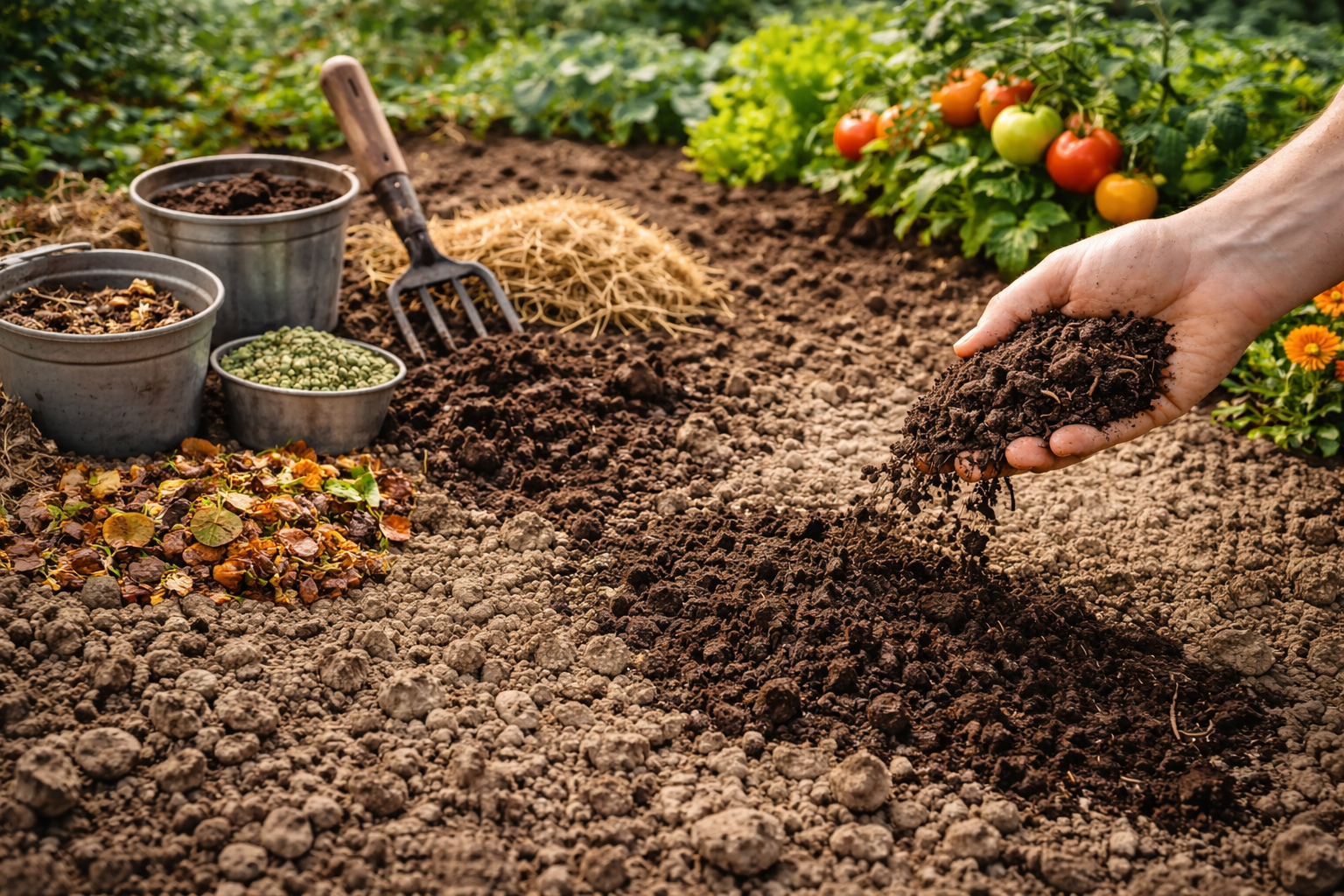
If you are searching for how to fix poor quality soil, your garden may be showing signs of stress. Plants may grow slowly, leaves may yellow, and the soil may feel hard or lifeless.
Fortunately, most soil problems can be corrected. Poor soil does not need to be replaced. Instead, it needs to be restored.
Understanding how to fix poor quality soil begins with rebuilding structure, organic matter, and microbial life. >> How to regenerate soil fast.
What Causes Poor Quality Soil?
Before deciding how to fix poor quality soil, it helps to identify the underlying cause.
Common soil problems include:
• Compaction
• Low organic matter
• Poor drainage
• Nutrient imbalance
• Reduced microbial activity
According to the USDA Natural Resources Conservation Service, soil health depends on structure, biological activity, and organic matter. When these elements decline, plant growth suffers.
https://www.nrcs.usda.gov/conservation-basics/soil-health
Therefore, improving soil quality requires restoring these core components.
>> How to bring soil back to life?
How to Fix Poor Quality Soil Naturally
If you want long term improvement, focus on biological restoration rather than short term feeding.
1. Improve Soil Structure
Compacted soil restricts root growth and limits oxygen movement. Loosening the surface gently and avoiding heavy tilling helps protect soil aggregates.
Over time, better structure improves drainage and water retention.
2. Increase Organic Matter
Compost, leaf mould, and organic residues improve soil texture and moisture balance. In addition, organic matter feeds soil organisms.
As a result, soil becomes darker, softer, and easier for roots to penetrate.
However, severely depleted soil may require additional biological support.
3. Restore Soil Biology
Healthy soil contains bacteria, fungi, and other microorganisms that break down nutrients and make them available to plants.
When soil biology declines, plants cannot access nutrients efficiently even if fertilizer is present.
Applying a biological soil extract made from vermicompost can help reintroduce beneficial microbes and restart nutrient cycling.
Ecoworm Soil Extract supports soil regeneration by:
• Introducing beneficial microorganisms
• Improving nutrient availability
• Supporting stronger root development
• Enhancing soil structure
Unlike synthetic fertilizers, which provide temporary growth, biological extracts support the soil ecosystem itself.
You may also find our guide on how to turn poor soil into good soil helpful for deeper restoration strategies.
4. Reduce Chemical Stress
Repeated chemical fertilizer use can disrupt soil balance. Therefore, reducing synthetic inputs while improving organic practices helps soil recover naturally.
The USDA Organic Program promotes soil building through natural methods rather than heavy synthetic use.
https://www.usda.gov/topics/organic
Signs Soil Quality Is Improving
When soil begins to recover, you may notice:
• Increased earthworm activity
• Improved drainage
• Stronger plant growth
• More stable moisture levels
• Better crop yields
These changes indicate that soil biology and structure are strengthening.
Final Thoughts
Learning how to fix poor quality soil is about rebuilding life beneath the surface. By improving structure, increasing organic matter, restoring microbial activity, and reducing chemical stress, soil can recover naturally.
Healthy soil creates resilient plants and consistent harvests. When you invest in soil regeneration, your entire garden benefits.
Frequently Asked Questions
Can poor soil be fixed without replacing it?
Yes. Most poor soil can be restored by rebuilding organic matter and microbial life rather than removing and replacing it.
How long does it take to fix poor soil?
Visible improvements often appear within one growing season. However, full restoration depends on consistency and soil condition.
Is fertilizer enough to fix poor soil?
No. Fertilizer feeds plants temporarily, but it does not rebuild soil structure or microbial balance. Long term soil health requires biological restoration.
Comments are closed