
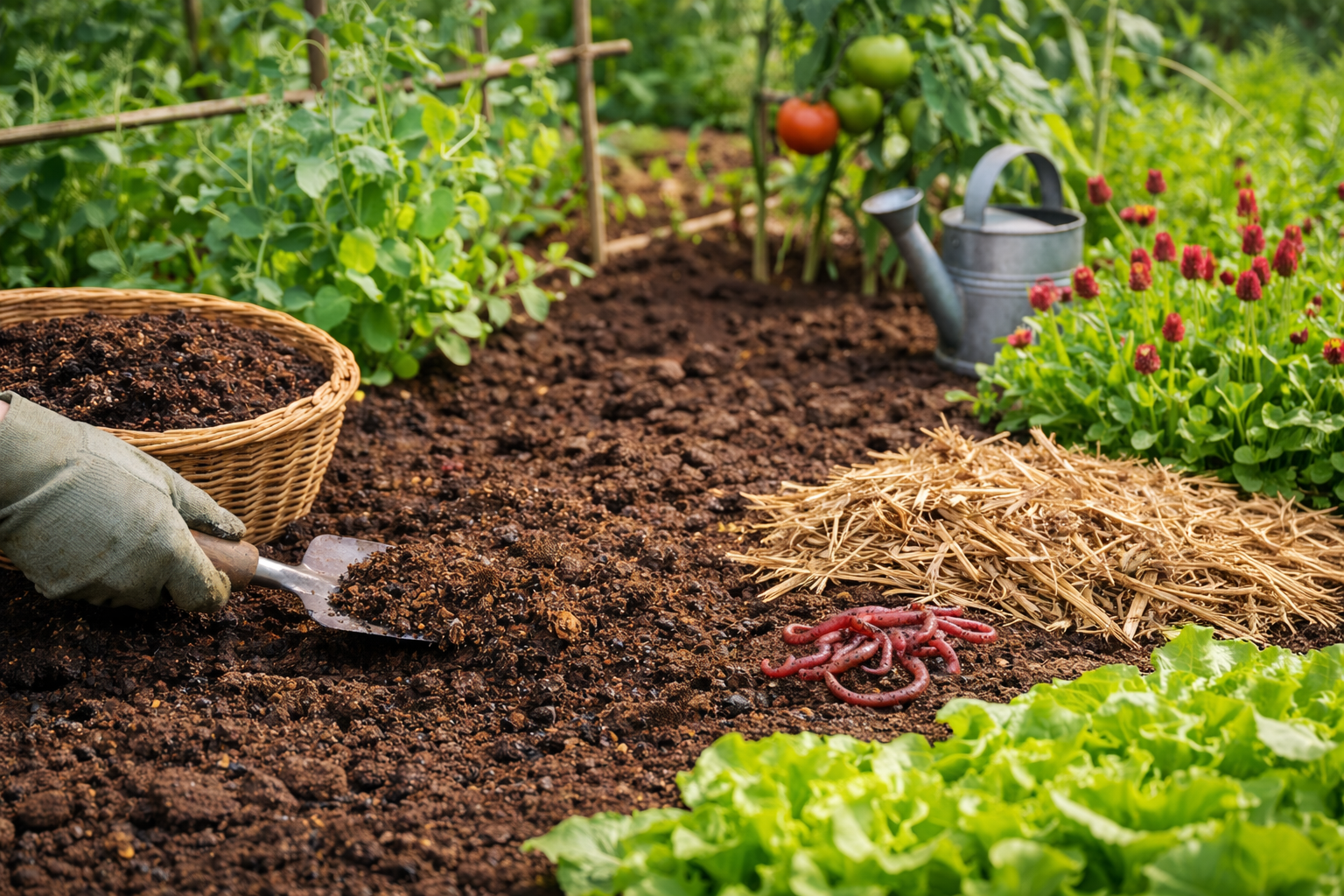
If you want to make soil rich, you need to focus on more than simply adding fertiliser. Rich soil is alive. It contains organic matter, beneficial microbes, balanced nutrients, and stable structure. When soil is healthy, plants grow stronger, resist stress better, and produce higher yields.
So what do you add to soil to make it rich? The answer is organic matter, biological support, and consistent soil care.
Why Soil Becomes Poor
Before you can make soil rich, you need to understand why soil loses fertility in the first place.
Soil becomes depleted when:
• Crops remove nutrients year after year
• Synthetic fertilisers disrupt microbial balance
• Organic matter is not replaced
• Soil becomes compacted
• Erosion washes nutrients away
As a result, plants struggle even if fertiliser is applied. Fertility depends not only on nutrients but also on soil biology. Rich soil depends on structure and living biology, not only nutrients, which is why soil health principles focus on organic matter and soil organisms.
If your soil is severely degraded, you may first need to fix poor quality soil.
How to Make Soil Rich Naturally
If you want to make soil rich long term, focus on rebuilding the soil ecosystem rather than relying on quick chemical solutions.
Add Compost Regularly
Compost is one of the most effective ways to make soil rich. It improves soil structure, increases water retention, and feeds beneficial microbes.
Compost helps sandy soils hold moisture while improving drainage in clay soils. Over time, soil becomes darker and crumbly, which is a clear sign of improving health.
Incorporate Organic Matter
In addition to compost, you can add:
• Aged manure
• Leaf mould
• Grass clippings
• Plant residues
Organic matter feeds soil organisms. In turn, microbes break down nutrients into forms plants can absorb.
For faster biological improvement, consider using an organic soil extract made from vermicompost. Ecoworm Soil Extract helps restore microbial activity and supports long term soil regeneration.
If you are trying to speed up recovery, read our guide on how to regenerate soil fast.
Use Cover Crops
Cover crops help make soil rich by adding organic material and protecting the surface from erosion.
Plants like clover, vetch, and rye:
• Add nutrients back into the soil
• Improve soil structure
• Reduce weed pressure
• Protect against nutrient loss
When cut and incorporated, they increase soil fertility naturally.
Mulch to Protect Nutrients
Mulching plays an important role in keeping soil rich.
Organic mulch:
• Prevents erosion
• Reduces moisture loss
• Feeds soil as it breaks down
• Protects microbial life
Without protection, rain and sun quickly deplete exposed soil.
Support Soil Biology
To truly make soil rich, you must feed the soil ecosystem.
Healthy soil contains bacteria, fungi, earthworms, and other organisms that create a natural nutrient cycle. When this system functions properly, plants require fewer external inputs.
If you are wondering whether very damaged soil can fully recover, you might also find helpful information in can you turn bad soil into good soil.
How Long Does It Take to Make Soil Rich?
Soil improvement does not happen overnight. However, visible changes can begin within one growing season if you consistently add organic matter.
After one to two years of proper care, soil structure improves significantly. Over several seasons, fertility stabilises and plant growth becomes noticeably stronger.
Consistency matters more than quick fixes.
Final Thoughts
To make soil rich, focus on adding compost, organic matter, cover crops, and biological support. Avoid relying only on synthetic fertilisers, as they do not rebuild soil life.
Rich soil is dark, crumbly, and full of life. When you invest in soil regeneration, your garden becomes healthier season after season.
Comments are closed