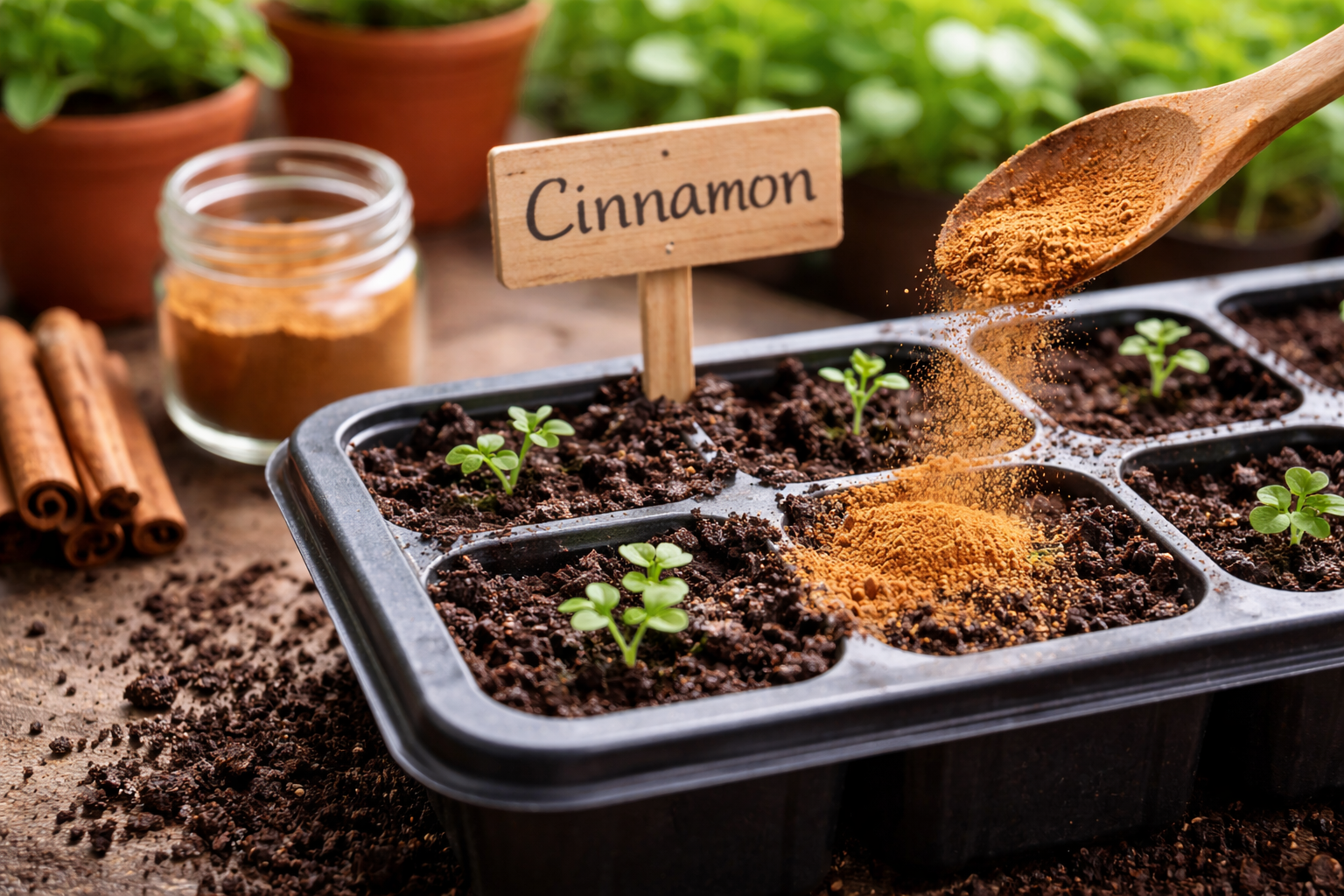
Many gardeners have heard that sprinkling cinnamon on top of soil can help prevent problems. But what does cinnamon on top of soil actually do? Is it a real solution or just a gardening myth?
Cinnamon is often used in home remedies because it contains natural antifungal properties. However, its effects in soil are limited and sometimes misunderstood.
Let’s look at what cinnamon can and cannot do in your garden.
Does Cinnamon Help Prevent Mold?
One of the main reasons people put cinnamon on top of soil is to reduce surface mold, especially in seed trays.
Cinnamon has mild antifungal properties. Therefore, it may help reduce visible white mold that appears on damp potting mix. However, it does not eliminate the root cause of mold, which is usually excess moisture and poor airflow.
Improving drainage and adjusting watering habits are far more effective long term solutions.
If you are dealing with deeper soil issues, you may want to read our guide on how to bring soil back to life.
Can Cinnamon Stop Damping Off?
Some gardeners use cinnamon to protect seedlings from damping off disease.
While cinnamon may help slightly reduce fungal presence on the surface, scientific evidence supporting strong disease control is limited. According to university extension research, proper sanitation and airflow are more reliable methods for preventing damping off.
Source: University of Minnesota Extension
https://extension.umn.edu/plant-diseases/damping
So, cinnamon may help a little, but it should not replace proper soil management.
Does Cinnamon Improve Soil Health?
Here is where many misconceptions arise.
Putting cinnamon on top of soil does not improve soil structure, increase nutrients, or restore microbial balance. It does not add organic matter or build long term fertility.
If your goal is to regenerate depleted soil, you need biological support and organic amendments.
For example, adding compost and using an organic soil extract can help restore beneficial microbes and improve nutrient cycling.
If your soil is compacted or nutrient poor, you may also want to read how to fix poor quality soil.
Does Cinnamon Repel Pests?
Some gardeners believe cinnamon deters ants or small insects.
While strong smells may temporarily discourage certain pests, cinnamon does not provide reliable pest control. For active insect problems, plant based soaps or integrated pest management methods are more effective.
The USDA promotes integrated pest management as a balanced approach to pest control.
https://www.usda.gov/topics/pests
For insect management in gardens, consider using a plant based garden soap instead of relying on household spices.
When Should You Use Cinnamon?
Cinnamon can be useful in small situations:
• Light surface mold on seed trays
• Minor fungal presence on potting mix
• Temporary surface treatment
However, it should not replace proper soil care, drainage improvement, or biological soil regeneration.
Better Long Term Soil Solutions
If your soil struggles with:
• Weak plant growth
• Poor drainage
• Compaction
• Low organic matter
Then the focus should be on rebuilding soil structure and microbial life.
Organic compost, cover crops, and biological soil conditioners support long term soil health. Unlike cinnamon, they address the root causes rather than the surface symptoms.
Healthy soil is dark, crumbly, and full of life. That is achieved through consistent organic management, not quick fixes.
Frequently Asked Questions
Is cinnamon safe for plants?
Yes. Small amounts of cinnamon are generally safe for plants and seedlings.
Can cinnamon kill fungus in soil?
It may reduce surface fungus, but it does not treat deeper soil diseases.
Is cinnamon a substitute for proper soil treatment?
No. It can be a minor helper, but long-term soil health requires organic matter and biological support.
Final Thoughts
Putting cinnamon on top of soil may help reduce minor surface mold. However, it does not improve soil fertility or repair poor soil conditions.
For lasting soil improvement, focus on organic matter, microbial balance, and proper soil management. Surface remedies may look helpful, but true soil health comes from rebuilding the ecosystem beneath your plants.
Comments are closed