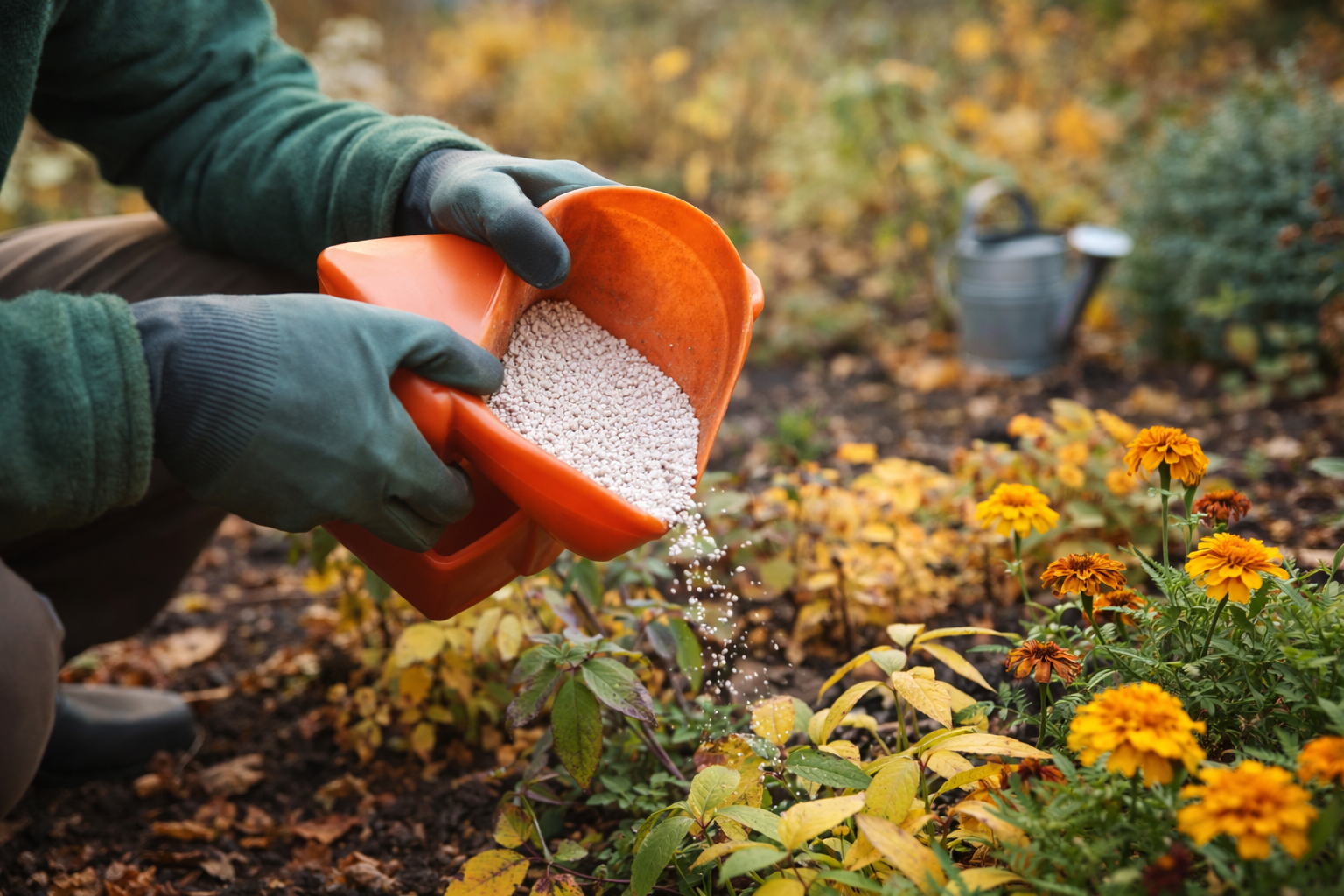
Many gardeners ask when to stop fertilizing plants as autumn approaches. Fertilizing at the wrong time can weaken plants before winter and reduce long term soil health.
So what month should you stop fertilizing plants? The answer depends on your climate zone, plant type, and whether you are using synthetic or organic fertilisers.
Why Timing Matters
Plants slow their growth as temperatures drop and daylight hours shorten. If you continue fertilizing during this period, you may encourage soft new growth that cannot survive frost.
Instead of strengthening plants, late fertilizing can make them more vulnerable to cold damage.
According to university extension guidance, most perennials and woody plants should stop receiving fertiliser six to eight weeks before the first expected frost.
Source: University of Minnesota Extension
https://extension.umn.edu/planting-and-growing-guides/fertilizing-gardens
What Month Should You Stop Fertilizing Plants in the US?
The correct month depends on USDA zone.
Zones 3 to 5
Stop fertilizing plants in late August or early September.
Zones 6 to 7
Stop fertilizing in mid to late September.
Zones 8 to 10
You can fertilize longer, often into October. However, reduce feeding once growth slows.
Warm climate gardeners may continue light feeding for winter vegetables, but heavy fertilization should still be avoided as days shorten.
If you are unsure about your soil condition, you may also want to read how to fix poor quality soil.
Does It Matter What Type of Fertilizer You Use?
Yes. The type of fertiliser matters significantly.
Synthetic fertilisers provide quick nutrients. Therefore, late application can push tender growth at the wrong time.
Organic soil conditioners and biological soil extracts work differently. They support soil life rather than forcing rapid plant growth.
For example, an organic soil extract made from vermicompost supports microbial balance without overstimulating soft top growth.
Because biological products improve soil health rather than forcing leaf growth, they can be used more gently in autumn without increasing frost risk.
If you want to understand how soil regeneration works, read how to regenerate soil fast.
What About Indoor Plants?
Indoor plants grow more slowly in winter due to reduced light. In most cases, you should reduce or stop fertilizing plants from late autumn until early spring.
Resume feeding once you see new active growth.
Signs You Should Stop Fertilizing
You should stop fertilizing plants when:
• Growth naturally slows
• Temperatures consistently drop
• Plants prepare for dormancy
• Frost is approaching
Continuing heavy feeding during dormancy can stress plant roots and disrupt natural cycles.
Focus on Soil Health Instead of Late Feeding
Rather than pushing growth late in the season, focus on improving soil health.
Adding compost, mulch, and biological soil conditioners in autumn helps prepare soil for spring. These methods strengthen the soil ecosystem without stimulating vulnerable growth.
Healthy soil supports stronger plants the following season.
Frequently Asked Questions
Can I fertilize in winter?
In cold climates, fertilizing during winter dormancy is not recommended. In warm climates, light feeding of active vegetables may continue.
Should I fertilize before frost?
Heavy fertilization should stop at least six to eight weeks before the first frost date.
Does organic fertilizer need to stop earlier?
Organic products that improve soil biology can be used more flexibly, but strong growth stimulants should still be reduced before dormancy.
Final Thoughts
Knowing when to stop fertilizing plants protects both plant health and soil structure. In most US climates, fertilizing should stop in late summer or early autumn, depending on zone.
Instead of forcing late growth, shift your focus toward soil regeneration and long term fertility. Strong soil creates stronger plants season after season.
Comments are closed